Gravitational waves
Gravitational waves offer a way to ask about the early Universe, phase transitions and particle physics at energies that are hard to reach in the laboratory.
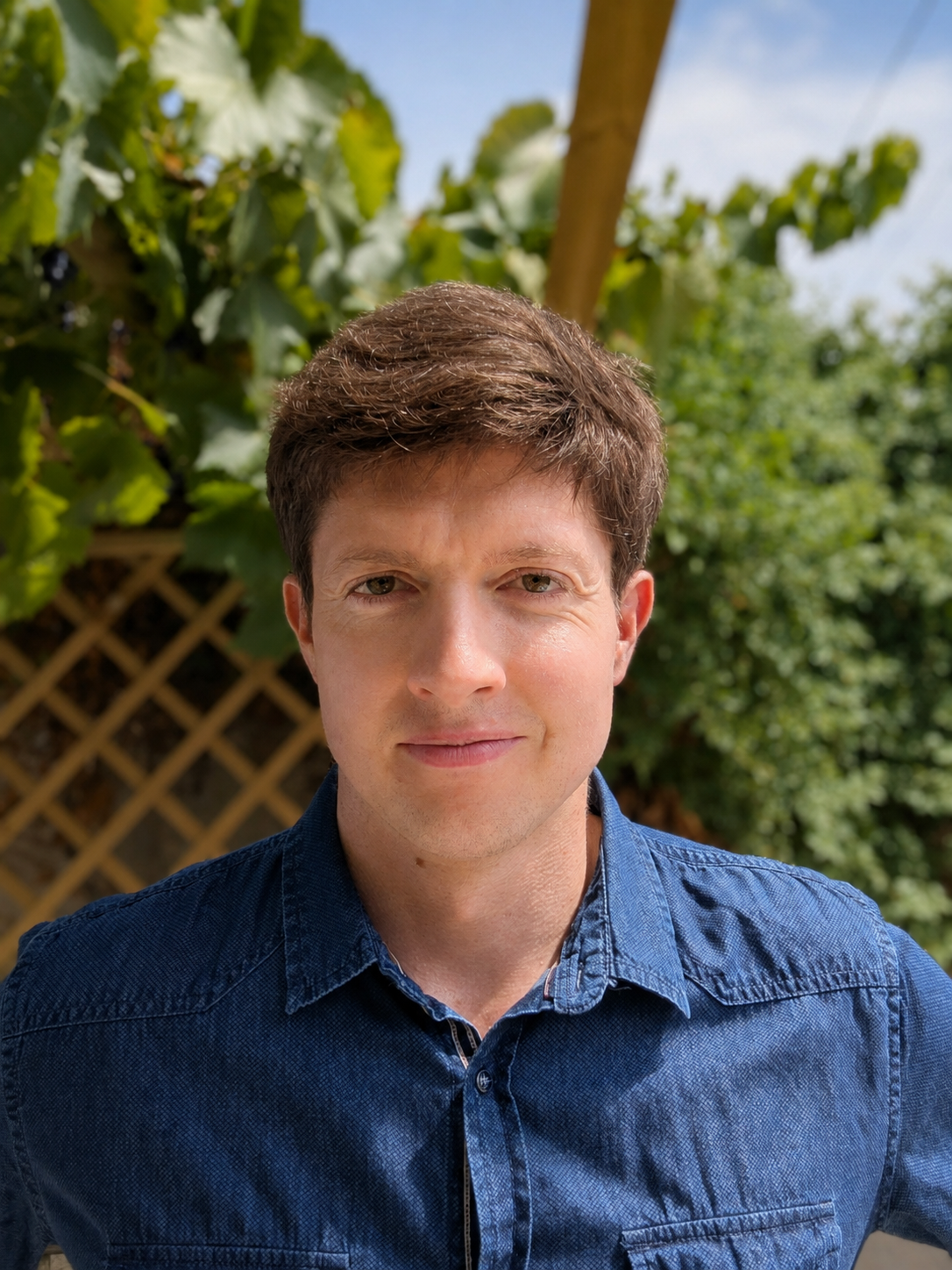
At the Institut d’Astrophysique de Paris
I am a CNRS researcher in the Physique théorique: gravitation et cosmologie (GReCO) group at the Institut d’Astrophysique de Paris. I am interested in what gravitational wave searches, primordial black holes and dark matter clustering might tell us about physics beyond the Standard Model.
Research directions
The Universe is a rich laboratory for fundamental physics. I look for relics and messengers that might offer clues about its history.
Gravitational waves offer a way to ask about the early Universe, phase transitions and particle physics at energies that are hard to reach in the laboratory.
Primordial black holes may be relics of the early Universe, and may offer windows onto its small scale structure.
Asking how dark matter forms and clusters, and what that might tell us about the dark sector and the cosmic history of the Universe.
The map below traces each question through its physical mechanisms, relics and measurable messengers.
A research map
Follow the arrows from fundamental theory to observable relics. Click a keyword to open its dedicated paper view.
Explore by keyword
Research matrix
No paper in this snapshot uses this keyword.
34 works in this snapshot · refreshed 9 September 2026
Open live INSPIRE recordTextbook · Springer Theses
A review of open puzzles in theoretical particle physics and cosmology, with a focus on heavy dark matter.
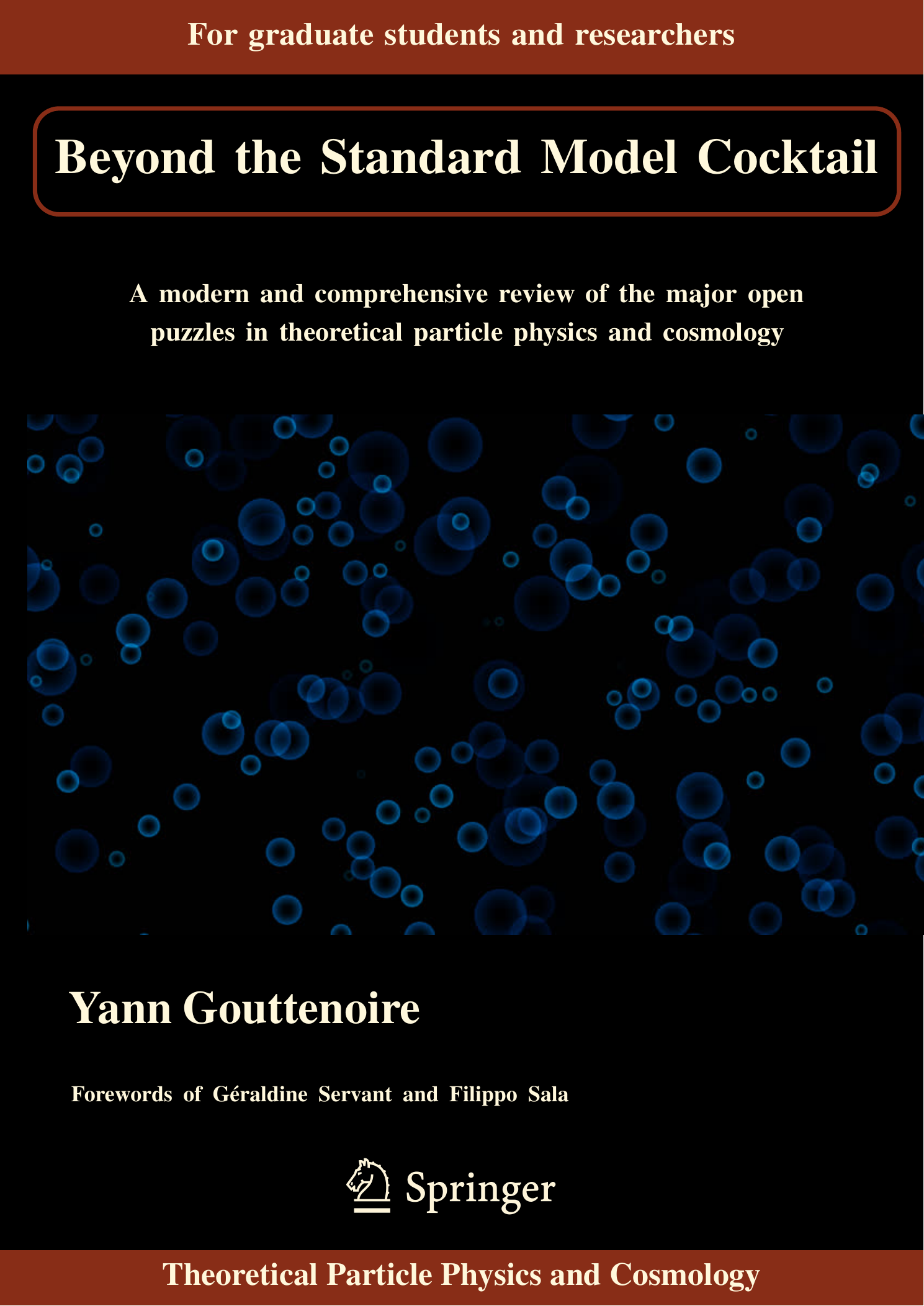
This book follows the questions that sit between the Standard Model and the history of the Universe. It introduces the hierarchy problem, the cosmological constant, the matter antimatter asymmetry and the dark matter problem, then surveys the proposed solutions.
The emphasis is on thermal dark matter, first order cosmological phase transitions and gravitational wave signatures. It is both a possible guide to open problems and a starting point for students and researchers entering particle cosmology.
Talks
Talks and slides
Outreach
Particle physics and cosmology sometimes wander outside the seminar room too. Here are a few examples: an article, a public talk and a handful of short French videos.
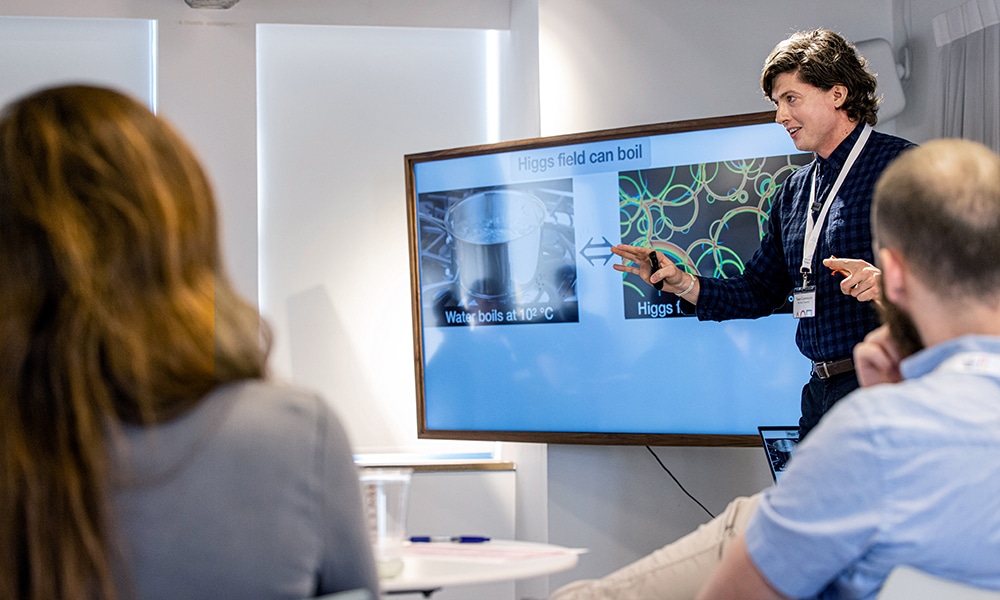
Aperio Science Magazine · 2022
An introduction to reading the early Universe for clues about where it came from, written with science journalist Dan Falk.
Read the feature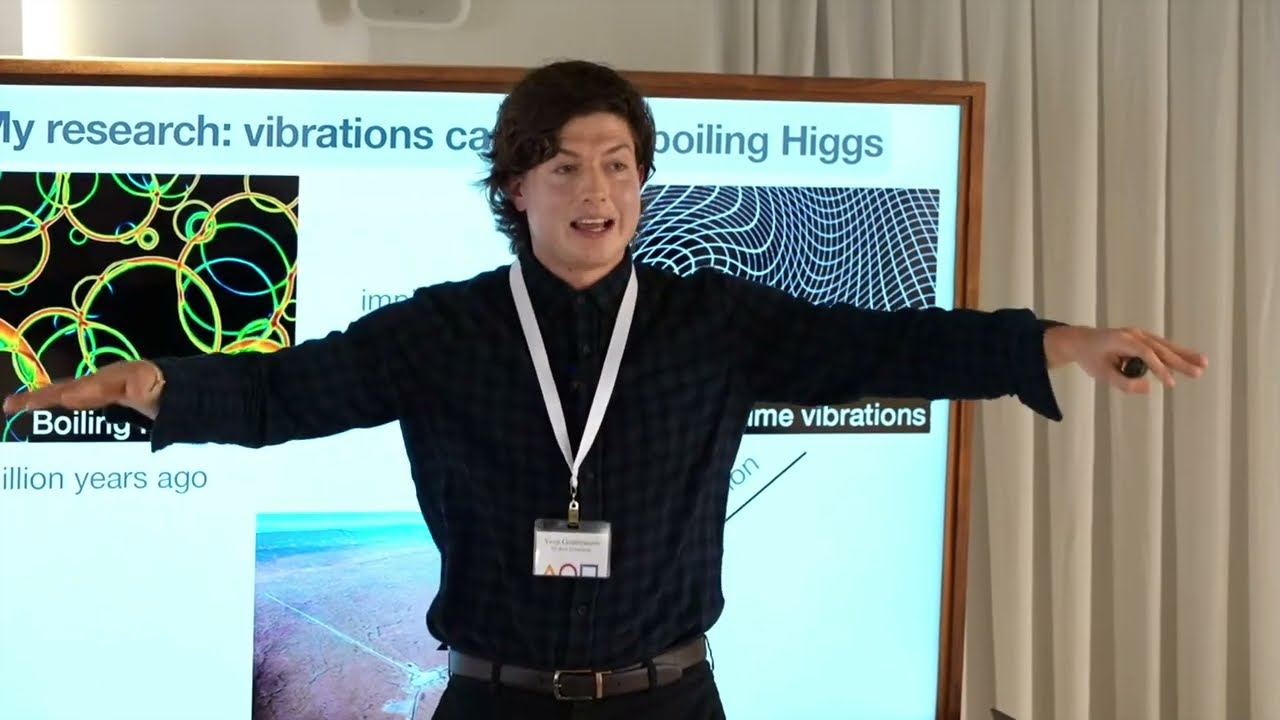
TED style talk
A kitchen table way to meet one of particle physics’ strangest ideas.
Watch the talkFrench language videos
A few short French videos, from the Higgs boson to the joys and oddities of a life in physics.
A conversation in French with Aurélia Zahedi about the colossal black holes behind a diffuse gravitational wave background.
An hour with the community at Neot Semadar, Israel, on a tour from black holes to the God particles.
Ten minutes in the Mitzpe Ramon desert on how space time vibrations help us understand mass. It won the best postdoc talk prize.
A 90 minute public talk and half an hour of questions in a French castle, with about 100 people in the room.
Teaching
A tour through physics, from electromagnetism at bachelor level to cosmology and quantum field theory at master level, plus a doctoral summer school session.
Academic teaching
Teaching assistant appointments in Hamburg and Orsay, with exercise sessions, grading and additional support for students.
Hamburg University · 22 hours of tutorials and exercise sheet grading. Lectures by Prof. Geraldine Servant.
Hamburg University · 45 hours of tutorials. Lectures by Prof. Gleb Arutyunov.
Hamburg University · 33 hours of tutorials. Lectures by Prof. Gleb Arutyunov.
Hamburg University · 35 hours of tutorials. Lectures by Prof. Gleb Arutyunov.
University Paris Sud 11, Orsay · 18 hours of tutorials for students needing additional support. Lectures by Prof. Khuôn-Viêt Pham.
Lecturing
A doctoral level session on beyond Standard Model particle physics and cosmology at the COST Summer School in Ljubljana.
COST Summer School on BSM particle physics and cosmology
Four hours of exercises and worked corrections, alongside lectures by Dr. Filippo Sala.
Curriculum vitae
A single linked document with my research, teaching, talks and academic path.
Complete document
For the longer version, open the linked PDF. The talk archive on this site opens each title directly to its presentation slides.
I oppose war and occupation wherever they occur, and I reject violence against civilians whoever commits it. Every war does the same thing to the people who had least say in starting it. It kills them, displaces them, starves them, and then it turns them into a statistic.
The fear that drives people to war is usually real. Killing the people you fear has never once ended that fear. It only passes it on to their children, who then have reasons of their own.
To anyone living inside such a war: I think of you, and above all of those who refuse to stay quiet about what is done in your name. I wish you the strength to keep seeing the other side as human, and the courage to say so while it is unpopular.
Science and peace
The clearest answer I know to what physics offers beyond physics is a machine in Jordan.
SESAME is a synchrotron light source in Jordan, open since 2017. Its members are Cyprus, Egypt, Iran, Israel, Jordan, Pakistan, Palestine and Turkey. Israelis, Iranians and Palestinians sit on the same council and take beamtime on the same machine.
It was built on the CERN model, and deliberately so. CERN itself was founded in 1954 to rebuild European science and to bind together countries that had just spent six years destroying one another.
None of this has ended a single conflict, and it was never going to. What it demonstrates is narrower and harder to wave away: people whose governments will not speak to each other will still share a beamline, argue about optics and publish from the same machine.
Contact
Institut d’Astrophysique de Paris · Paris, France